The homes in Bartow carry a lot of history in their walls. Electrical contractors in Lakeland who work these houses regularly know that a panel sized for a smaller load, two-prong outlets throughout, and circuits that trip when two appliances run at once are not random problems - they are what expert electrical panel upgrade work is built around here.
Homeowners in Bartow call a local electrician rather than a general one because the work inside these houses demands someone who has opened them before and knows what to expect.
Knowing Bartow Homes Changes How the Work Gets Done
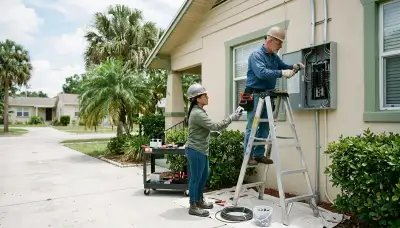
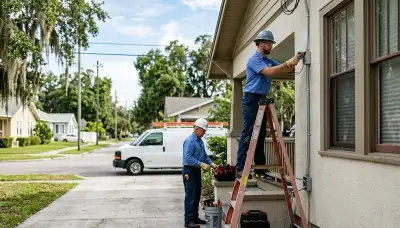
A local electrician working in Bartow knows that most of the houses here went up from the forties through the seventies, built on slab on grade with block and stucco construction, panels tucked into utility closets or mounted on exterior walls, and no basement underneath to run new circuits through.
Two kinds of work come up repeatedly in Bartow: bringing panels up to what the house is now being asked to carry, and adding properly grounded circuits where two-prong outlets still cover whole rooms. Homeowners in Eagle Lake, FL deal with similar demands from the same building period.
If the breaker will not reset or the outlet feels warm to the touch, getting it looked at now keeps a small problem from becoming a costly one.
Electrical Work Matched to How Bartow Homes Are Built
An off-the-shelf approach fails in Bartow because slab-on-grade construction with block and stucco walls means there is no crawlspace to fish wire through. Running a new circuit often means opening walls or ceilings, and a technician who does not know that will underprice the job and underdeliver.
Block and stucco homes need wall penetrations planned before the work starts. Older frame additions attached to a block core change the routing entirely. Homes with detached garages or workshops add long outdoor runs that age differently from the house itself. Reliable electrical wiring work accounts for all of it before the first hole is cut.
Across Bartow, the work that fits these homes best includes professional electrical panel installation, quality GFCI circuit installation, specialist generator installation, and expert ceiling fan installation - each one matched to what these houses were built to hold and what they are being asked to carry now.
What the Age of Bartow Homes Still Decides Today
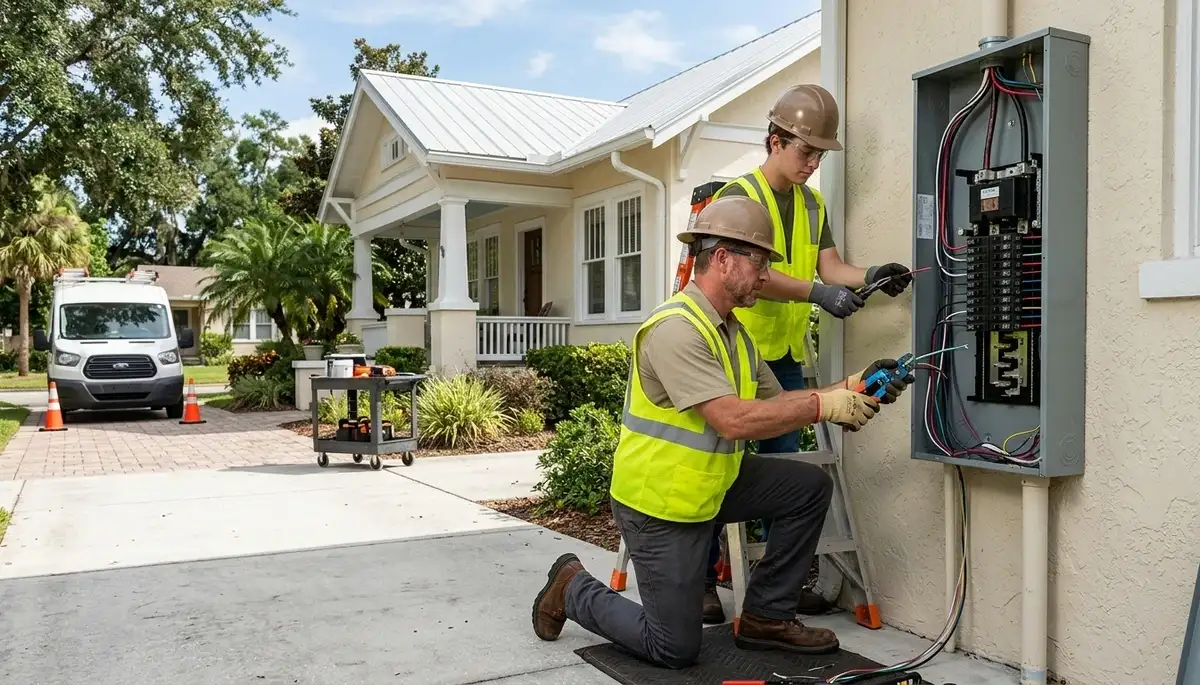
Most of the houses around Bartow went up from the forties through the early seventies. Homes from that period came with 60-amp service, fuse boxes rather than breaker panels, two-prong ungrounded outlets, and wiring that was never meant to carry central air conditioning, a refrigerator, a dishwasher, and a home office running at the same time. Three things follow from that: the panel is almost certainly undersized, the outlets in most rooms are ungrounded, and the wiring in homes from the late sixties and early seventies may be aluminum rather than copper.
The Panel Has No Room Left
When every slot in the breaker box is full and a homeowner needs another circuit, the instinct is to double up on a breaker. That is the moment the panel tells you it was sized for a house with far fewer loads than this one now carries. A full panel with no room for expansion is a fire risk waiting for a busy afternoon.
Local electricians correct this by replacing the undersized box with a panel that matches what the house actually draws. Homeowners in Mulberry, FL face the same conversation, and the fix is the same: right-size the panel before adding anything else.
Outlets That Are Warm to the Touch
An outlet that feels warm, or a light that dims when the air conditioning kicks on, points to aluminum wiring - common in homes built in the late sixties and early seventies. Aluminum expands and contracts differently from copper, and the connections loosen over time, building heat at every junction.
Local electricians address aluminum wiring by installing approved connectors at every device and replacing outlets and switches with ones rated for aluminum. The result is connections that stay tight and stop generating heat at the wall.
Two-Prong Outlets Throughout the House
Years of use have not changed what two-prong outlets cannot do: they offer no ground path, which means a surge has nowhere to go except through the device plugged into the wall. In a Bartow home where most rooms still have two-prong outlets, that gap covers a lot of ground.
Adding grounded outlets means either running a new grounded circuit or installing the outlets with reset buttons that meet current requirements. Both approaches give the homeowner a safe place to plug in and protect what is plugged in.
The Service Was Never Sized for What Got Added
A pool pump, an electric car charger, and a new air conditioning unit each draw load the original service was never calculated to handle. When a heavy load starts up, the rest of the house feels it - lights dim, other circuits trip. High demand on a hot afternoon pushes that strain further.
Capacity is added by upgrading the service entrance and replacing the panel with one sized for the full load the house now carries. Once that is done, the car charges overnight, the pool pump runs on its own circuit, and the air conditioning starts without dimming every light in the house.
Running Wire Through Block and Stucco Walls
Slab-on-grade block construction means there is no basement or crawlspace to run wire through. Every new circuit has to travel inside the walls, and cutting into block and stucco requires planning the route before any work begins.
Local electricians who know these houses plan the route first, use existing chases where they exist, and patch cleanly when a wall has to be opened. The job takes longer than it would in a wood-frame house, but it is done without leaving the homeowner with open walls at the end of the day.
To arrange a no-pressure visit with a local electrician who knows Bartow homes, call (863) 313-1212 and describe what the house is doing. The conversation starts there.
On Call Electrical brings work that holds to every Bartow home it touches.

Electrical Services Available Across Bartow, FL
The list below covers the range of work available to homeowners in Bartow, FL. Find what matches the situation in your house and reach out to get it handled.
Urgent Electrical Repairs for Bartow, FL Homes
- Electrical Repair - A breaker that will not reset or an outlet that sparks needs attention before it becomes a hazard in these older homes.
- Outlet Repair - Loose or dead outlets are common in houses where the wiring has been in the walls for decades.
- Switch Repair - A switch that crackles or fails to hold position is a sign the connection behind the wall has loosened.
- GFCI Outlets - Kitchens and bathrooms in homes from this period often still lack the outlets with test and reset buttons required near water.
- Electrical Service - When the service coming into the house can no longer keep up with what the homeowner is running, the whole system feels it.
If any of these match what the house is doing right now, a call gets the right person to the door.
Panel, Capacity, and Wiring Work for Bartow, FL Homes
- Electrical Panel Upgrade - Homes originally wired for 60 or 100 amps need a panel that matches what they carry today.
- Electrical Panel Installation - A new panel replaces the fuse box or the undersized breaker box and gives the house room to grow.
- Electrical Wiring - Wiring from the forties through the seventies was not built for the loads these homes run now.
- New Construction Wiring - Additions and detached structures need wiring that meets current requirements from the first connection.
- Electric Car Charger Installation - A dedicated circuit sized for the charger keeps the rest of the house running normally while the car charges overnight.
Panel and wiring work in Bartow homes requires knowing the construction before the job starts - slab on grade and block walls change every step of the routing.
Safety and Protection Work for Bartow, FL Homes
- Whole Home Surge Protection - A surge that comes in through the service entrance can reach every device in the house; whole-home protection stops it at the panel.
- Lightning Surge Protection - Homes here sit exposed, and a direct strike or a nearby one sends voltage through every circuit connected to the panel.
- Smoke Detector Installation - Detectors placed correctly and wired to the panel give the homeowner time that battery-only units cannot guarantee.
- Home Electrical Inspections - An inspection of a Bartow home from this period often turns up grounding gaps, overloaded circuits, and connections that have been warm for years.
- Fire Alarm Installation - A wired fire alarm system gives the whole house coverage that a handful of standalone detectors cannot match.
Safety work in a Bartow home built in the fifties or sixties often uncovers more than the homeowner expected - grounding gaps, aluminum connections, and panels that have been running at capacity for years. Getting a full picture before something fails is the reason homeowners here schedule inspections rather than wait for a problem to announce itself.
Lighting, Outdoor, and Added-Load Work for Bartow, FL Homes
- Landscape Lighting - Outdoor lighting on a Bartow lot needs its own circuit, run correctly from the panel to every fixture.
- Pool Pumps - A pool pump drawing full load on a circuit shared with the house is one of the fastest ways to find out the panel is undersized.
- Recessed Lighting Installation - Adding recessed lighting to a block and stucco home means planning the route through the ceiling before cutting begins.
- Ceiling Fan Installation - Older boxes in these ceilings were not rated for a fan's weight and motion; the right box has to go in first.
- Security Lights - Motion-activated security lighting on a detached garage or along the back of the lot needs a properly protected outdoor circuit.
Outdoor and added-load work in Bartow touches circuits that have been outside for decades and equipment the original service was never sized to carry. Getting it right means starting with what the panel can actually handle.