The homes in Seffner keep local electricians busy with the same patterns: panels that were sized for far less than what runs through them today, outlets without ground, and circuits that trip when two appliances share a run. The electrical contractors in Lakeland behind this network know these houses, and a call connects a homeowner with an electrician who handles expert electrical panel upgrade work matched to what the house actually needs.
When a house was built for one set of demands and is now carrying another, a local electrician who has worked these homes spots the gap faster and fixes it right the first time.
Knowing Seffner Homes Changes How the Work Gets Done
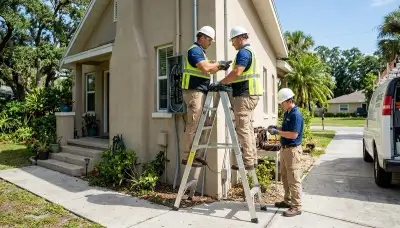
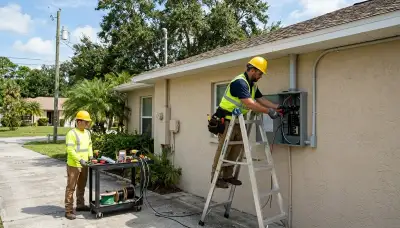
Most of the houses here went up in the fifties, sixties, and into the early seventies, built on slab foundations with block and stucco walls. A local electrician knows where the panel sits, how the wiring runs, and what opening a wall in one of these homes actually involves before the first tool comes out.
These homes often need panel replacements and circuit additions that a stranger would underestimate. Homeowners in Plant City, FL deal with similar slab-built houses and the same access challenges when new circuits have to be pulled through block walls.
If the breakers trip regularly or an outlet feels warm, getting it looked at now keeps a manageable repair from turning into a much larger one.
Electrical Work Matched to How Seffner Homes Are Built
An off-the-shelf approach fails in these homes because pulling a new circuit through a block and stucco wall on a slab is not the same job as running wire through a wood-frame house with an open attic. Access drives the plan before the work begins.
Slab-built block homes require fishing wire through walls or running it through attic space, which adds time and precision to every job. Homes with attached garages add a second panel location to consider. Detached outbuildings need their own outdoor runs. A quality ceiling fan installation in a block-wall home, for example, depends on knowing exactly what is above the ceiling before any work starts.
Across Seffner, the work that fits these homes best includes professional GFCI circuit installation near kitchens and bathrooms, reliable generator installation for homes that need a backup source, specialist home electrical inspection for buyers and long-term owners, and expert electrical wiring for homes where the original runs have never been touched.
What the Age of Seffner Homes Still Decides Today
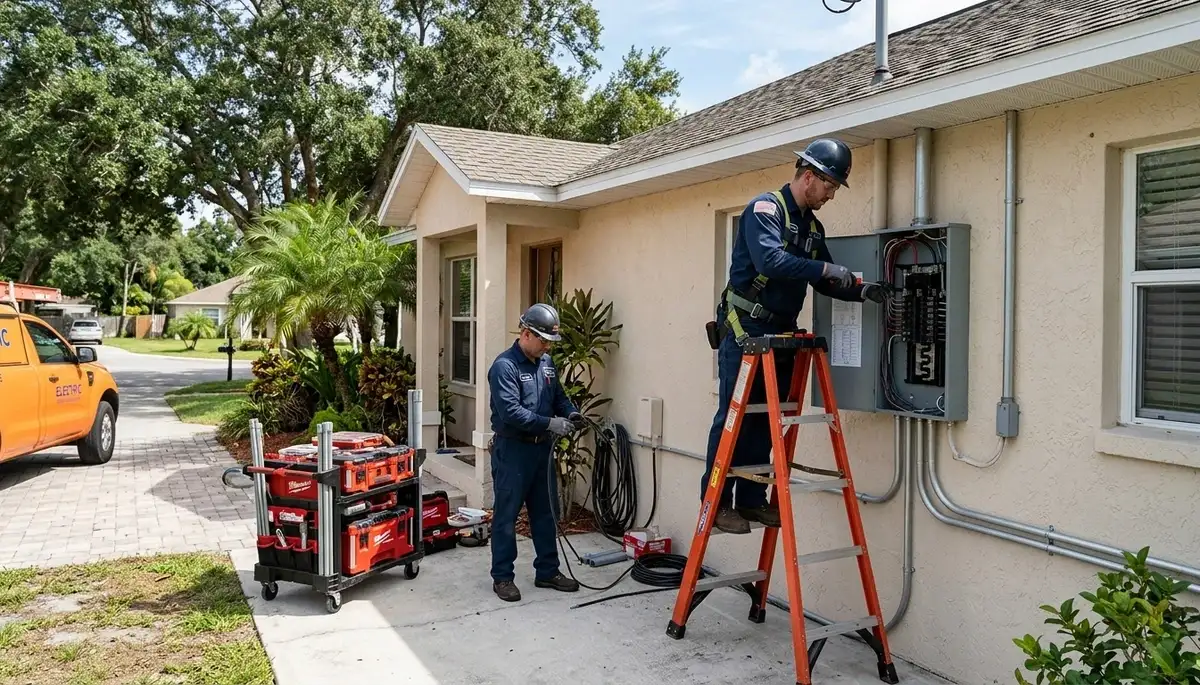
Most houses around here went up from the late forties through the early seventies. Homes built in that stretch came with sixty-amp service, ungrounded two-wire runs, and panels designed before central air, dishwashers, or electric dryers were part of a normal household load. Three things follow from that and still shape every job: the panel is almost certainly undersized, the outlets in older rooms are likely ungrounded, and any aluminum wiring installed in the late sixties or early seventies deserves a close look at every connection point.
Panel Running Out of Room
A homeowner notices it when there are no empty slots left in the breaker box and adding anything new means doubling up or going without. Behind that is a sixty- or hundred-amp service that was never sized for a modern kitchen, a second bathroom, and a window unit on every floor. Left alone, a full panel gets circuits doubled up, which creates heat and raises the risk of a breaker failing to trip when it should.
Local electricians handle this with a full panel replacement or a subpanel addition that gives the house room to grow. Homeowners in Valrico, FL face the same undersized-service problem in homes from the same building period, and the correction works the same way: replace the box, bring the service up to what the house actually draws.
Outlets That Have No Ground
Two-prong outlets throughout the house are the sign. There are no reset buttons near the sinks, and plugging in anything with a three-prong cord requires an adapter. The wiring behind those outlets was run before grounding was required, and it leaves appliances and electronics without the fault path that keeps a short from becoming a shock or a fire.
Adding grounded outlets and installing the outlets with test and reset buttons near water brings the home up to what modern use demands. The homeowner ends up with outlets that work with every device and a fault path that does its job if something goes wrong.
Wiring That Runs Hot at the Connections
An outlet warm to the touch, lights that dim when the refrigerator cycles, or a breaker that trips on a lightly loaded circuit are the signs. Homes built in the late sixties and early seventies sometimes have aluminum branch wiring, which expands and contracts at a different rate than the copper terminals it connects to. Over decades, those connections loosen and create resistance that produces heat.
An electrician goes through each connection point, installs the correct anti-oxidant compound and compatible devices, and eliminates the resistance that was building heat. The two things that improve immediately are the stability of the circuit and the temperature at the outlets.
Service Sized for a Much Lighter House
A car charger in the garage, a pool pump out back, or a new air conditioning system added to a house that started with window units puts a load on a panel that was never calculated to carry it. The panel may handle it most of the time, but on a hot afternoon with the air conditioning running and the charger active, it draws more than the service was sized for.
Adding a subpanel in the garage or upgrading the main service to two hundred amps gives the house the headroom it needs. After the upgrade, the homeowner can run the car charger, the pool equipment, and the air conditioning at the same time without watching the breaker box.
Getting Wire Through Block Walls
In a wood-frame house, running a new circuit is often a morning of work. In a block and stucco home on a slab, the same circuit may require fishing wire through the attic, drilling through block, or opening a section of wall. The physical structure of the house decides how long the job takes and how much disruption it causes.
Local electricians who work these homes regularly plan the route before they start, use the attic where it is accessible, and keep wall cuts to the minimum needed. The result is a finished circuit with the least disruption to the rooms in between.
Call (863) 313-1212 to arrange a visit with a local electrician who will look at the house, describe what it needs, and give a straight answer with no pressure to decide on the spot.
On Call Electrical delivers work that holds, done right the first time for Seffner homeowners.

Full Electrical Services Available in Seffner, FL
The work listed below covers what homeowners around here ask for most. Find what fits the situation and reach out to get it handled.
Urgent Electrical Repairs for Seffner, FL Homes
- Electrical Repair - A breaker that will not reset, an outlet that stopped working, or a fixture that flickers without explanation needs attention before the problem spreads to other circuits.
- Outlet Repair - An outlet that feels warm, shows scorch marks, or fails to hold a plug is a sign of a connection that has deteriorated behind the wall.
- Switch Repair - A switch that sparks, feels loose, or controls a fixture intermittently has wear inside that does not improve on its own.
- GFCI Outlets - Kitchens, bathrooms, and garage walls in these homes often still have standard outlets where the test-and-reset type is now required.
- Electrical Service - When the main service to the house is damaged, undersized, or failing at the weatherhead, restoring it is the first priority before anything else in the home works safely.
If any of these match what is happening in the house right now, a call to (863) 313-1212 connects a homeowner with someone who can come out and look at it.
Panel, Capacity, and Wiring Work for Seffner, FL Homes
- Electrical Panel Upgrade - A panel that was installed when the house had half the load it carries today cannot keep up and should be replaced before it causes a problem.
- Electrical Panel Installation - New panel installations put the right equipment in the right location for the house as it is used now, not as it was used when it was built.
- Electrical Wiring - Original wiring in homes from the fifties and sixties was run for fewer circuits and lighter loads than these houses carry today.
- New Construction Wiring - Additions, garage conversions, and new rooms need wiring that meets current requirements and integrates cleanly with what is already in the house.
- Electric Car Charger Installation - A dedicated circuit for a car charger keeps the vehicle charged without pulling from circuits that are already near capacity.
Homes here were wired for a world without car chargers, second refrigerators, or home offices, and bringing the panel and wiring up to what the house actually runs is the correction that makes everything else work.
Safety and Protection Services for Seffner, FL Homes
- Smoke Detector Installation - Detectors in the right locations, hardwired and interconnected, give every room in the house a warning path that battery-only units cannot match.
- Fire Alarm Installation - A full alarm system tied to the electrical system covers a house that battery detectors alone cannot protect adequately.
- Whole Home Surge Protection - A surge at the panel can damage every device in the house at once; protection installed at the panel stops it before it reaches the circuits.
- Lightning Surge Protection - Homes with exposed outdoor equipment and long runs to detached structures need surge protection that covers more than just the main panel.
- Home Electrical Inspections - An inspection of the panel, the wiring, the grounding, and the outlets tells a homeowner exactly what the house has and what it is missing.
For homeowners who have not had the wiring looked at in years, an inspection is the clearest way to find out whether the house is carrying its current load safely. A call to (863) 313-1212 gets the process started, and the electrician who comes out will explain what was found without pressure to act on everything at once.
Lighting, Outdoor, and Added-Load Work for Seffner, FL Homes
- Landscape Lighting - Low-voltage landscape lighting tied to a dedicated outdoor circuit keeps the yard lit without pulling from interior circuits that are already loaded.
- Security Lights - Motion-activated security lighting on the exterior of the house runs on a circuit separate from the porch and garage lights so it is always available.
- Pool Pumps - A pool pump draws a significant load and needs its own circuit sized for the motor; running it from a shared circuit causes breaker trips and shortens the pump's life.
- Ceiling Fan Installation - Adding a ceiling fan to a room in a block-wall home requires knowing what is above the ceiling before cutting, and the right box for a fan that will run for years.
- Recessed Lighting Installation - Recessed fixtures in a slab-built home with block walls require careful planning of the attic run and the switch location before any cuts are made.
From a pool pump circuit to a full set of exterior security lights, the work available through this network covers what Seffner homes are being asked to carry now, not just what they were built for decades ago.