Houses in Fort Meade, FL were built mostly through the fifties and sixties on slab-on-grade lots, and most still carry the panels and wiring put in when those slabs were poured. The electrical contractors in Lakeland behind this network know those houses well, including the breaker that will not reset and the outlet warm to the touch that points to something deeper. A call to a local electrician often starts with professional electrical panel upgrade work that the original service was never designed to handle.
Homeowners in Fort Meade call a local electrician rather than a general one because the work inside a slab-built house from that era involves constraints a stranger to these homes would underestimate.
Knowing Fort Meade Homes Changes What Gets Fixed
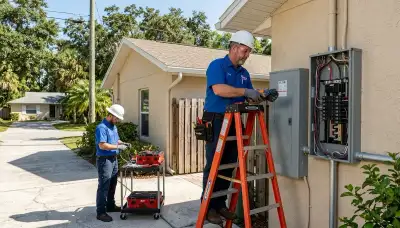
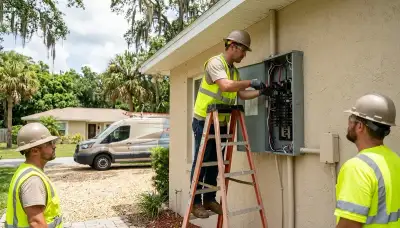
A local electrician working in Fort Meade knows that most of these slab-on-grade houses have the panel mounted on an interior utility wall, no basement or crawlspace to run through, and concrete underfoot that turns a new circuit into a job that opens walls and ceilings.
Two kinds of work come up most often in Fort Meade homes: panels that topped out when a window unit became central air, and circuits that trip the moment a second appliance runs in the kitchen. Homeowners in Bartow, FL deal with similar pressures from the same building period.
Getting an electrician in to look at it early costs far less than tracing a fault after it has had years to spread.
Electrical Work Matched to How Fort Meade Homes Are Built
An off-the-shelf approach fails in Fort Meade because slab construction means there is no underfloor access. Running a new circuit requires opening finished walls or ceilings, and the job scope changes depending on where the panel sits relative to the room that needs the circuit.
Block-and-stucco homes common here make fishing wire through walls slower than in wood-frame construction. Older frame homes on the same block carry different constraints at the panel end. Either way, expert ceiling fan installation in a room without an existing switched circuit means planning the run before the first screw turns.
Across Fort Meade homes, the work that fits these houses best includes quality generator installation for a panel that can handle a transfer switch, specialist GFCI circuit upgrades near every water source, reliable outlet repair on circuits that have been overloaded for years, and professional smoke detector installation in homes that still carry original hardware.
What Fort Meade Homes Were Wired For Then and Now
Most houses in Fort Meade went up in the fifties and sixties, when a sixty-amp service was considered adequate and a household ran a refrigerator, a few lights, and a window unit at most. That wiring is still in a lot of these homes. Three things follow from it: the panel is often full with no room to add a breaker, the circuits were never separated the way a modern kitchen requires, and the grounding was either minimal or absent entirely.
The Panel Is Out of Room
A homeowner notices this when a breaker trips and there is no open slot to add another one. Panels in Fort Meade homes from this era were sized for a load that did not include central air, a dishwasher, or a home office. Running all three pushes the service past what it was built to carry, and a full panel with no room to expand is the first sign.
Local electricians handle this by replacing the original panel with one sized for the actual load the house now carries. Homeowners in Eagle Lake, FL face the same panel capacity problem from the same building period, and the correction is the same: a panel that matches what the house runs today.
Two-Prong Outlets Throughout the House
Two-prong outlets are the visible sign that the wiring behind them was installed before grounding was required. A homeowner using an adapter to run a three-prong device has no ground path, which means a surge or a fault has nowhere safe to go. Over time, adapters become permanent, and the risk grows quietly.
Replacing two-prong outlets and adding the grounding the circuit was missing brings those rooms up to what they need. The homeowner can plug in without an adapter, and the wiring behind the outlet is no longer working without a safety net.
Outlets Warm to the Touch
An outlet that feels warm, or lights that dim when another appliance starts on the same circuit, points to wiring that has been carrying more than it was built for. In homes from the mid-sixties to early seventies, aluminum branch wiring was common, and its connections loosen over time in ways copper connections do not. A loose aluminum connection generates heat at the junction.
Local electricians address this by inspecting the connections at every outlet and switch on the affected circuit, treating each one, and confirming the circuit runs cool. The two things that change for the homeowner are outlets that no longer run warm and lights that hold steady when the air conditioning starts.
Added Loads the Service Was Never Sized For
A car charger in the garage, a pool pump on a dedicated circuit, or a new air conditioning system each draws more than the original sixty-amp service was designed to supply. When the house runs all of them, the panel is carrying a load it was never built for, and a hot day multiplies the demand further.
Adding capacity means upgrading the service entrance and replacing the panel with one sized for the full load. After the upgrade, the homeowner can run the car charger, the air conditioning, and the pool equipment without watching the breaker box.
Running Wire Through a Slab-Built House
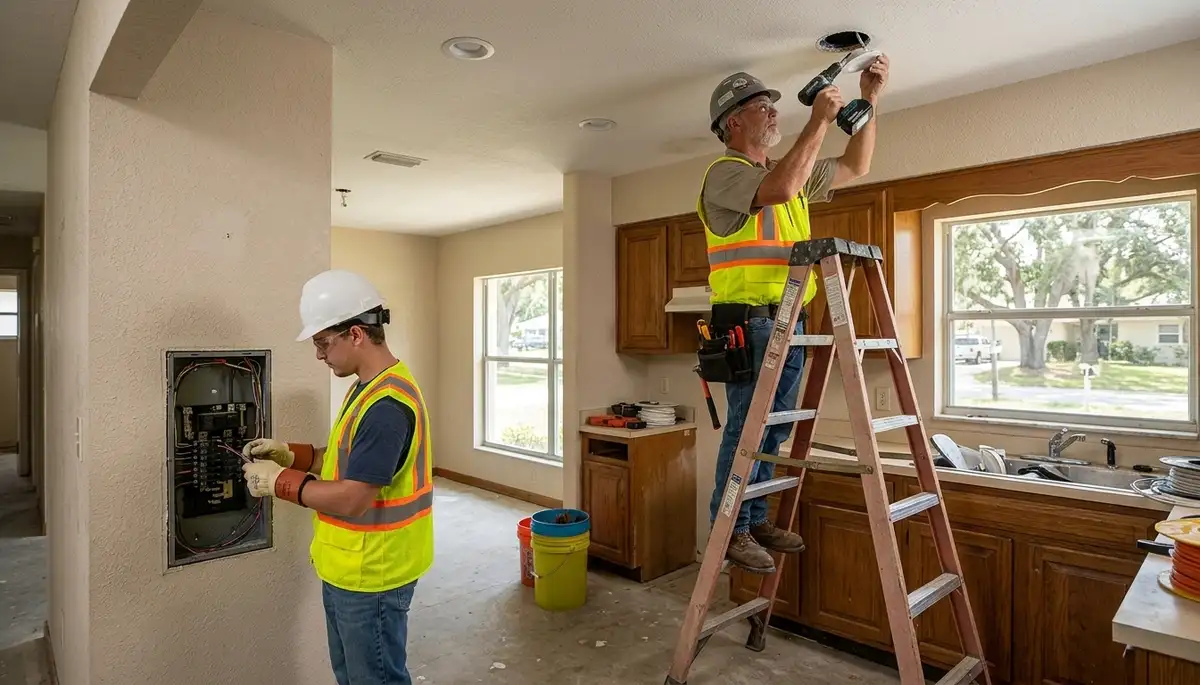
With no basement and no crawlspace, every new circuit in a Fort Meade slab home has to travel through walls or ceilings. A long run from the panel to a back bedroom or a garage outlet means opening drywall, running the wire, and closing it back up cleanly.
Local electricians plan the route before opening anything, choosing the path that disturbs the least finished surface. In most Fort Meade homes, that means running through interior wall cavities rather than across ceilings, keeping the repair straightforward and the disruption short.
Call (863) 313-1212 to arrange a no-pressure visit with a local electrician who knows these houses and can tell you what the work actually involves before anything is opened.
On Call Electrical handles Fort Meade homes with the kind of care that keeps the work from coming back.

Full Electrical Services Available in Fort Meade, FL
The services below cover the range of electrical work available to Fort Meade homeowners. Find the one that fits what the house is showing you and call to get it looked at.
Urgent Electrical Repairs for Fort Meade, FL Homes
- Electrical Repair - A breaker that will not reset or an outlet that stopped working points to something that needs attention before it gets worse.
- Switch Repair - A switch that sparks, feels loose, or no longer controls the light it should is a sign the connection behind it has failed.
- Outlet Repair - An outlet that is warm, discolored, or dead on a circuit that still has power needs the connection checked and corrected.
- GFCI Circuits - Outlets near sinks and in garages that lack test and reset buttons leave those areas without the protection the wiring needs.
- Electrical Service - A service that trips under normal load or cannot carry what the house runs is a repair that cannot wait.
If any of these match what your house is doing, a local electrician can find the source and correct it the same visit.
Panel, Capacity, and Wiring Work in Fort Meade, FL Homes
- Electrical Panel Upgrade - A panel that is full, runs hot, or predates central air was sized for a load the house stopped running decades ago.
- Electrical Panel Installation - Replacing a fuse box or a panel that can no longer be safely expanded gives the house a service that matches what it carries now.
- Electrical Wiring - Original wiring in homes from the fifties and sixties was not run for the number of circuits or the load those rooms carry today.
- New Construction Wiring - An addition or a converted garage needs wiring run from scratch and tied into a panel that has room to take it.
- Home Electrical Inspections - A full inspection of a Fort Meade home shows exactly what the wiring, panel, and grounding can and cannot handle.
Knowing what the panel and wiring can carry tells a homeowner where to put the next dollar and what can wait another season.
Safety and Protection Work in Fort Meade, FL Homes
- Whole Home Surge Protection - A single surge can reach every circuit in the house through the panel; protection at the service entrance stops it before it travels.
- Lightning Surge Protection - Homes in Fort Meade, FL sit in an area where a direct or nearby strike can travel through unprotected wiring and reach every connected device.
- Smoke Detector Installation - Original detectors in homes from this era have exceeded their useful life and no longer respond the way a working unit should.
- Fire Alarm Installation - A wired alarm system tied to the panel provides coverage that a battery unit in a single room cannot match.
- GFC Outlets - Bathrooms, kitchens, and garages in older Fort Meade homes often lack the outlets with test and reset buttons that protect those areas.
Each of these protects something a homeowner cannot see from the outside: the wiring path between the panel and every outlet and device in the house. Getting them right means the house is covered whether or not anyone is home, and a Fort Meade homeowner who has had the work done does not have to wonder what would happen if the power surged tonight.
Lighting, Outdoor, and Added-Load Work in Fort Meade, FL Homes
- Recessed Lighting Installation - Older homes in Fort Meade, FL were wired for surface fixtures; adding recessed lighting means running new circuits to rooms that were never planned for them.
- Landscape Lighting - Outdoor runs to yard lighting age differently from interior wiring and often need the connections and the wire itself inspected and replaced.
- Electric Car Charger Installation - A level-two charger draws more than most Fort Meade panels were sized to supply; adding one starts with confirming the service can carry it.
- Pool Pumps - Pool equipment in Fort Meade homes runs on a dedicated circuit that takes its own share of a panel already carrying central air and a water heater.
- Security Lights - Motion-activated lights on the exterior of a slab home need a circuit run through finished walls to reach them, which changes the scope of the job.
Adding any of these to a Fort Meade home means planning the circuit before running it, confirming the panel has room, and making sure the outdoor connections are protected against the exposure they will face year after year.