The homes in Dover carry the kind of electrical work that shows up in houses built on slab, framed in block and stucco, with panels tucked into garages or utility closets and circuits that were sized long before central air and car chargers were part of the picture. The electrical contractors in Lakeland who serve this area know what those houses hold and what they need, and professional electrical panel upgrade work is one of the first things that comes up when a homeowner here starts running out of room in the breaker box.
When a house was built the way most Dover homes were built, a general electrician from outside the area spends the first hour figuring out what a local one already knows walking in the door.
What Local Electricians Know About Dover Homes
Most houses around here went up on slab foundations, which means running a new circuit is not a matter of dropping wire through a basement. It means tracing a path through block walls or across ceilings, and knowing where the panel sits in the garage before the truck pulls up changes how the job gets planned.
Two kinds of work come up most often in these houses: panels that have no empty slots left and outdoor runs to pool equipment or detached garages that have aged differently from the main structure. Homeowners in nearby Plant City, FL deal with similar slab-construction challenges, and the approach carries over.
If the breaker trips and will not reset, or an outlet near the kitchen sink feels warm, those are signs worth having looked at before the problem gets larger.
Electrical Work Matched to How Dover Homes Are Built
An approach that works in a wood-frame house over a crawlspace does not translate directly to a block-and-stucco home on slab. Fishing wire through block walls takes different tools and more time, and the path a circuit takes from the garage panel to a back bedroom or a pool pump matters before the work starts.
Slab homes with attached garages handle the panel work differently than detached structures do, and houses with long outdoor runs to a workshop or pool equipment introduce a separate set of considerations. Expert GFCI circuit installation, for instance, follows a different path when the outlets near water are at the far end of a long run from the panel.
The range of work these homes call for includes quality ceiling fan installation, reliable generator installation, specialist recessed lighting installation, and professional smoke detector installation, each matched to what the house can actually support.
When Dover Homes Were Built Still Shapes What They Need
Most of the houses around Dover went up from the late 1970s through the 1990s, built on slab in block and stucco construction with panels sized for the loads of that era. Three things follow from that: the original circuits were not counted for today's kitchen appliances, the panels often sit at or near their original capacity, and outdoor wiring for pool equipment or yard lighting has had decades to age in place.
The Panel Has No Room Left
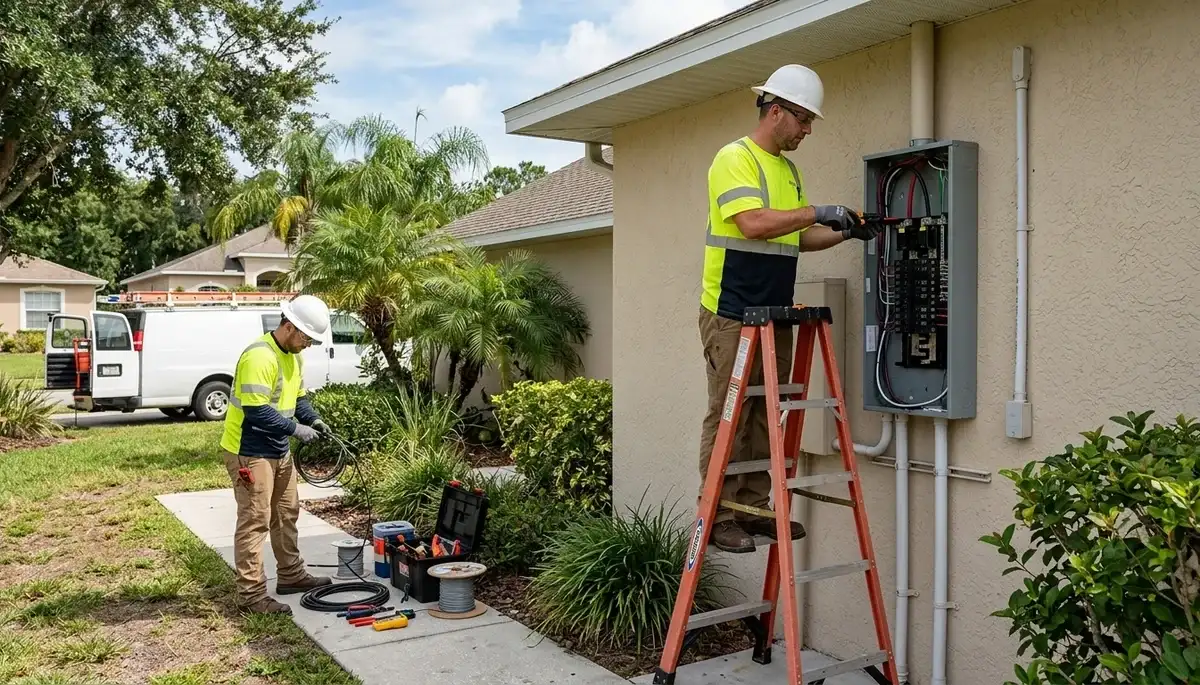
A homeowner adds a car charger or a second air handler and finds the breaker box is already full. Older panels in these houses were sized for a load that did not include the equipment sitting in the garage today, and a full box means the next addition either gets skipped or gets wired unsafely.
Local electricians handle this by assessing whether a sub-panel feeds the added load or whether the main service needs to come up in capacity. The fix is sized for what the house is actually running now, not what it ran when it was built. Homeowners in Valrico, FL face the same capacity questions in houses of the same era.
Outlets That Trip or Feel Warm
An outlet that feels warm to the touch or a breaker that trips when the microwave and the toaster run at the same time points to circuits that were not drawn for the way a kitchen gets used now. Left alone, a warm outlet is a fire risk, not just an inconvenience.
Adding a dedicated circuit for the kitchen or separating the loads that are currently sharing one run brings the wiring back in line with what the room actually demands. The homeowner stops resetting breakers and the outlet stops getting warm.
Outdoor Wiring That Has Aged Out
Pool equipment runs, yard lighting, and circuits to detached garages were often installed at the same time as the house and have been exposed to the elements ever since. Connections that were sound at installation can corrode or loosen over decades, and a circuit that worked fine for years can develop a fault without warning.
Replacing aged outdoor runs and bringing connections up to current standards protects the equipment on the end of the circuit and reduces the risk of a fault in a place where it is hard to notice quickly.
Modern Loads on a Service That Was Never Sized for Them
An electric car charger, a pool pump, and a new air conditioning unit each draw more than the appliances they replaced. A house that sat comfortably within its original service capacity can find itself running short once those loads are added, and a hot afternoon puts extra demand on a panel that was already close to its limit.
Adding a dedicated circuit for the charger and evaluating the overall panel load tells the homeowner exactly what the system can carry and what needs to change before the next addition goes in. Running the pool pump and the car charger at the same time should not be a question.
Running Wire Through Block Walls
In a house built on slab with block walls, every new circuit involves finding a path that does not require opening large sections of finished surface. A tight utility closet or a panel mounted on an exterior wall adds another layer to the planning before any wire gets pulled.
Local electricians who know these houses plan the run before the work starts, using the garage panel location and the slab layout to find the path that reaches the room with the least disruption to finished walls and ceilings. The homeowner gets the circuit in the right place without a wall that needs repainting from one end to the other.
To arrange a no-pressure visit from a local electrician who knows Dover homes, call (863) 313-1212. There is no obligation, and the conversation starts with what the house actually has.
On Call Electrical delivers work that holds in Dover homes, visit after visit.

Electrical Services Available Across Dover, FL
The work listed below covers the range of what local electricians handle in these homes. Find what fits the situation and call to talk through the details.
Urgent Electrical Repairs for Dover, FL Homes
- Electrical Repair - A breaker that will not reset or an outlet that has stopped working entirely needs a look before it becomes a larger problem in a slab home where tracing the circuit takes extra steps.
- Outlet Repair - Outlets that feel warm, spark when something is plugged in, or simply stop holding a plug are common in houses where the original wiring has been in service for decades.
- Switch Repair - A switch that buzzes, feels loose, or controls a light that flickers points to a connection that has worked loose over years of use.
- Electrical Panel Upgrade - When the breaker box is full and the next addition has nowhere to go, upgrading the panel is the practical answer for a house that keeps growing its load.
- Home Electrical Inspections - A full inspection finds the problems a homeowner cannot see: connections that have loosened, wiring that has aged, and circuits that are running closer to their limit than they should be.
Any of these situations is worth a call before it gets more complicated.
Panel, Capacity, and Wiring Work for Dover, FL Homes
- Electrical Panel Installation - Houses that still carry the original panel from when they were built often need a full replacement rather than just an upgrade, especially when the original equipment is no longer supported.
- Electrical Service - The service coming into the house sets the ceiling for everything else. A house that was wired for a smaller load needs the service brought up before new circuits make sense.
- Electrical Wiring - New circuits, rewired rooms, and corrected runs through block walls all fall under wiring work that changes what the house can do.
- New Construction Wiring - An addition or a converted garage needs wiring drawn from scratch, sized for the room and connected to a panel that can handle the added load.
- Electric Car Charger Installation - A dedicated circuit for the charger keeps it from competing with the rest of the house and protects the panel from a load it was not originally sized to carry.
These houses were wired for a different set of demands than most of them are carrying now, and bringing the capacity up to match the load is the work that makes everything else reliable.
Safety and Protection Work for Dover, FL Homes
- Whole Home Surge Protection - A surge that comes through the service entrance can reach every outlet and appliance in the house in a fraction of a second. Protection at the panel stops it before it travels.
- Lightning Surge Protection - A direct or nearby strike sends a spike through the wiring that standard breakers are not designed to catch. A dedicated suppressor handles what the panel cannot.
- GFCI Circuits - The outlets with test and reset buttons near sinks, in garages, and around pool equipment protect against shock in the places where water and electricity come close together.
- Fire Alarm Installation - Interconnected detectors in a slab home with block walls need to be placed so that a fire in one room is heard throughout the house, not just in the room where it starts.
- Smoke Detector Installation - Detectors that are more than ten years old or that chirp and then go silent when the battery is replaced are past their reliable service life and should be replaced.
These are the protections that matter most in a house where the wiring has been in service for decades and the loads have grown beyond what was originally planned. Calling (863) 313-1212 to schedule a safety review is the straightforward next step for any homeowner who is not sure what the house currently has in place.
Lighting, Outdoor, and Added-Load Work for Dover, FL Homes
- Landscape Lighting - Low-voltage outdoor runs that feed yard lighting age in the ground and at the connections, and a circuit that has been in place since the house was built may need to be traced and corrected before new fixtures go in.
- Pool Pumps - A pump that trips its breaker or runs on a circuit shared with other equipment puts extra demand on wiring that was not sized for a dedicated motor load.
- Security Lights - Motion-activated lights on the exterior of a block-and-stucco home need a circuit that reaches the mounting point without running exposed wire across finished surfaces.
- Ceiling Fan Repair - A fan that wobbles, hums, or causes the light on the same circuit to flicker is often a wiring or connection problem at the box, not a problem with the fan itself.
- Recessed Lighting Installation - Running new recessed fixtures in a slab home means finding the path from the panel through block or across the ceiling without opening more surface than the job requires.
Outdoor equipment and added lighting are the loads that Dover homes are being asked to carry now, and getting the wiring right for each one keeps the rest of the system from feeling the strain.