Homes in Lake Alfred were built mostly from the forties through the seventies, and the electrical contractors in Lakeland who serve them know what that means: fuse boxes still in place, two-prong outlets in older rooms, and expert electrical panel upgrade work that comes up on nearly every job. A network of local electricians handles these houses every week.
Because the wiring in these homes reflects what was code decades ago, homeowners here need someone who can read those systems without guesswork and correct them without tearing the house apart.
What Local Electricians Know About Lake Alfred Homes
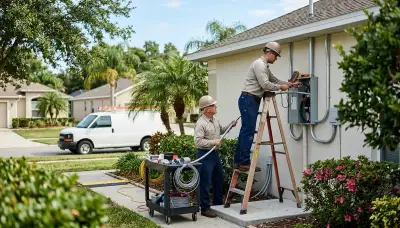
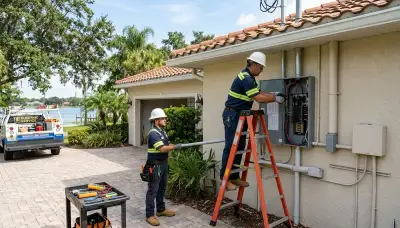
A local electrician working in Lake Alfred knows these houses sit on slab-on-grade foundations with block and stucco construction, which means running a new circuit often means opening walls or ceilings rather than dropping wire through a basement or crawlspace.
The work these homes need most falls into two areas: bringing older panels up to what the house is actually drawing today, and adding circuits where extension cords have become permanent fixtures. Homeowners in nearby Auburndale, FL electrical services face similar demands from the same building era.
If something in your home is warm to the touch, flickering, or tripping repeatedly, get it looked at before a small problem becomes a dangerous one.
Electrical Work Matched to How Lake Alfred Homes Are Built
Block-and-stucco construction on a slab means there is no easy path for wire to travel between floors or across rooms. An off-the-shelf approach that works in a framed house with a basement simply does not apply here, and forcing it adds cost and damage.
Older block homes here often have panels mounted on an interior utility wall with no room to expand, while homes built in the sixties and seventies may carry aluminum branch wiring that needs reliable GFCI circuit protection at every affected outlet. Detached garages and pool structures on larger lots add outdoor runs that aged separately from the main house.
Four services come up repeatedly across Lake Alfred homes: professional generator installation for homes that lose power and need a backup source, quality electrical wiring work to replace aging conductors, specialist ceiling fan installation where older boxes cannot handle the load, and expert smoke detector installation to bring protection up to current standards.
How the Age of Lake Alfred Homes Shapes What They Need Today
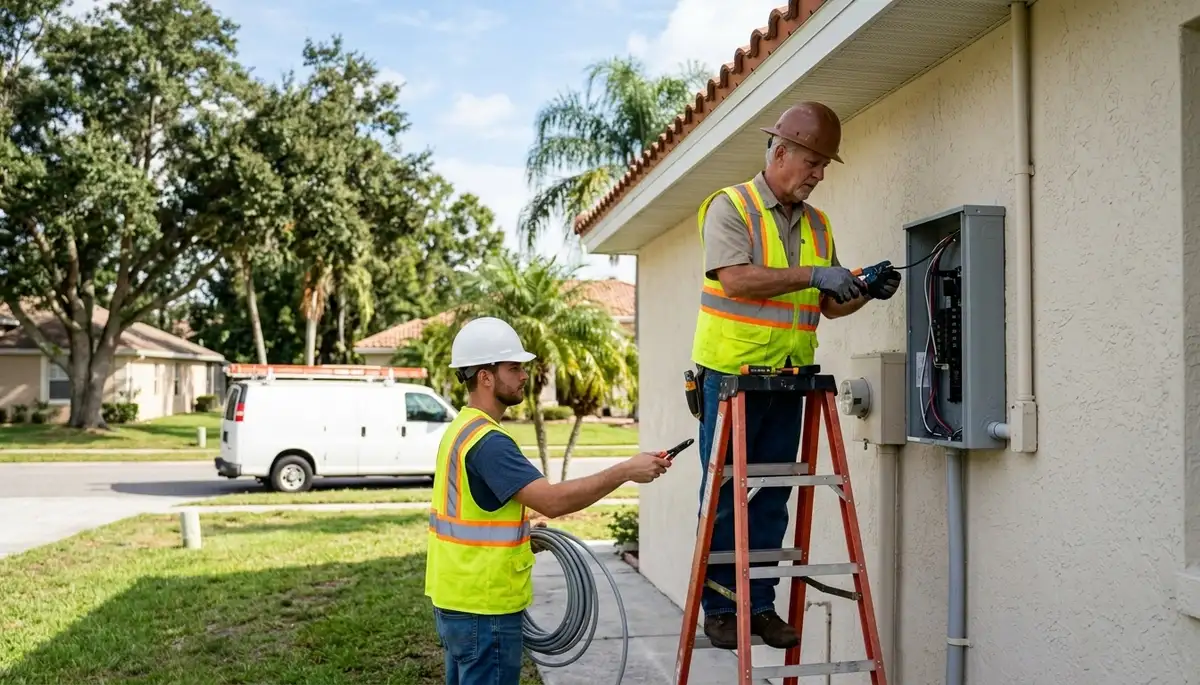
Most houses in Lake Alfred went up from the forties through the late sixties, a period when panels were sized for sixty to one hundred amps and aluminum wiring was common in homes built from the mid-sixties onward. Three things follow directly from that: fuse boxes that were never replaced, outlets with no ground, and wiring that runs warm under loads the house was never designed to carry.
Fuses Instead of Breakers
A homeowner in a Lake Alfred house from this era may still have a fuse box rather than a breaker panel. Fuses that blow repeatedly get replaced with a higher-rated fuse to stop the nuisance, which removes the only protection the circuit has. Over time that creates a fire risk behind walls the homeowner cannot see.
Local electricians replace fuse boxes with modern breaker panels sized for what the house draws today. The work is done at the panel and the service entrance, and it does not require opening finished walls throughout the house.
Outlets Warm to the Touch
Aluminum wiring, common in homes built from the mid-sixties through the early seventies, expands and contracts at connections differently than copper does. That movement loosens connections over years of use, and a loose connection generates heat. An outlet that feels warm or a light that dims when another appliance starts are the signs a homeowner notices first.
The correction involves inspecting every connection point and installing approved devices that make aluminum-to-copper transitions safely. Homeowners in Bartow, FL with homes from the same period deal with this same issue. After the work, connections hold and the warmth at outlets stops.
No Ground on the Outlets
Two-prong outlets throughout a house mean the wiring was installed before grounding was required. That leaves appliances and electronics without a path to clear a fault, and it means surge protection devices cannot do their job properly.
Adding grounding to an older home involves running a ground to the panel or installing the outlets with reset buttons where a ground wire cannot be reached. Both approaches bring the outlets up to what the house needs and give surge protection something to work with.
A Panel That Was Never Sized for What Was Added
A pool pump, an electric car charger, and a new air conditioning unit each draw power the original panel was never sized to supply. As each load was added, the panel absorbed it until breakers began tripping under normal use. High-demand equipment pushes the service past its limit on hot afternoons when everything runs at once.
Adding capacity means replacing the panel with one rated for the actual load, or in some cases adding a subpanel for the garage or pool equipment. After the upgrade, the homeowner can run the car charger, the pool pump, and the air conditioning without watching the breaker box.
Slab Construction and What It Means for New Circuits
Because these homes sit on a slab with no basement or crawlspace beneath them, running a new circuit from the panel to a room on the far side of the house means working inside finished walls. There is no floor cavity to route wire through, so the path matters from the start.
Local electricians plan the route before the work begins, using existing cavities inside block walls and ceiling spaces where they exist, and making cuts only where no other path is available. Work gets done with the smallest footprint the job allows, and patching is handled before the job is closed out.
Call (863) 313-1212 to arrange a visit from a local electrician who can look at what your home has and tell you exactly what it needs - no pressure, no guesswork.
On Call Electrical brings work that holds to every Lake Alfred home it touches.

Full Electrical Services Available Across Lake Alfred, FL
The list below covers the range of work available to homeowners in Lake Alfred, FL. Find what fits your situation and reach out to get it handled.
Urgent Electrical Repairs for Lake Alfred, FL Homes
- Electrical Repair: a breaker that will not reset, an outlet that stopped working, or a circuit that trips every time two things run at once
- Outlet Repair: outlets that are warm, discolored, or no longer hold a plug securely
- Switch Repair: switches that spark, feel loose, or control a light that flickers on and off
- Fire Alarm Installation: detectors that are past their service life or missing from rooms where they are required
- Home Electrical Inspections: a full look at what the house has before a problem shows itself
If any of these match what you are seeing at home, call before it gets worse.
Panel, Service, and Wiring Work for Lake Alfred, FL Homes
- Electrical Panel Upgrade: replacing a fuse box or an undersized breaker panel with one rated for what the house draws today
- Electrical Panel Installation: new panel work for a home that is adding square footage or a major load
- Electrical Service: bringing the service entrance up to what the house and its added equipment require
- Electrical Wiring: replacing aluminum branch wiring or running new circuits to rooms that need them
- New Construction Wiring: full wiring for additions or outbuildings added to an existing Lake Alfred property
Homes built in the forties through the sixties often need more than one of these, and the work is planned so each piece supports the next.
Safety and Protection Work for Lake Alfred, FL Homes
- GFCI Circuits: the outlets with test and reset buttons, required near water and missing from most older homes here
- GFC Outlets: individual outlet replacements in kitchens, bathrooms, garages, and outdoor locations
- Whole Home Surge Protection: a device at the panel that stops a voltage spike from reaching every appliance in the house
- Lightning Surge Protection: protection sized for the surge a direct or near strike can send through the service entrance
- Smoke Detector Installation: hardwired detectors that do not depend on a battery going dead at the wrong time
Each of these addresses a risk a homeowner in an older Lake Alfred house can picture: an ungrounded outlet near the sink, a power surge that kills an appliance, or a detector that was never replaced. Getting these right means the house protects the people inside it, and it means the electrical system behind the walls is doing what it was supposed to do all along.
Lighting, Outdoor, and Added-Load Work for Lake Alfred, FL Homes
- Landscape Lighting: low-voltage outdoor runs that reach yard fixtures without overloading the circuits they connect to
- Pool Pumps: dedicated circuits for pool equipment that draws more than a shared circuit can reliably supply
- Electric Car Charger Installation: a Level 2 charger circuit added to a panel that has the capacity to support it
- Recessed Lighting Installation: in-ceiling fixtures added to rooms where the existing box and circuit can handle the load
- Ceiling Fan Repair: restoring a fan that wobbles, hums, or no longer responds to its switch
These are the loads Lake Alfred homes are being asked to carry now, and getting each one on its own properly sized circuit means the panel handles the house rather than the house outrunning the panel.