Homes in Lake Wales were built largely from the forties through the seventies on slab-on-grade foundations with block and stucco construction, and the electrical contractors in Lakeland who serve them regularly find panels sized for a fraction of today's loads, two-prong outlets on circuits that were never grounded, and professional electrical panel upgrade needs that have been deferred for decades. A network of local electricians handles these jobs every week.
Those conditions make a local electrician the practical call, because a stranger to these houses spends the first hour figuring out what someone familiar already knows about how the work reaches them.
What Local Electricians Know About Lake Wales Homes
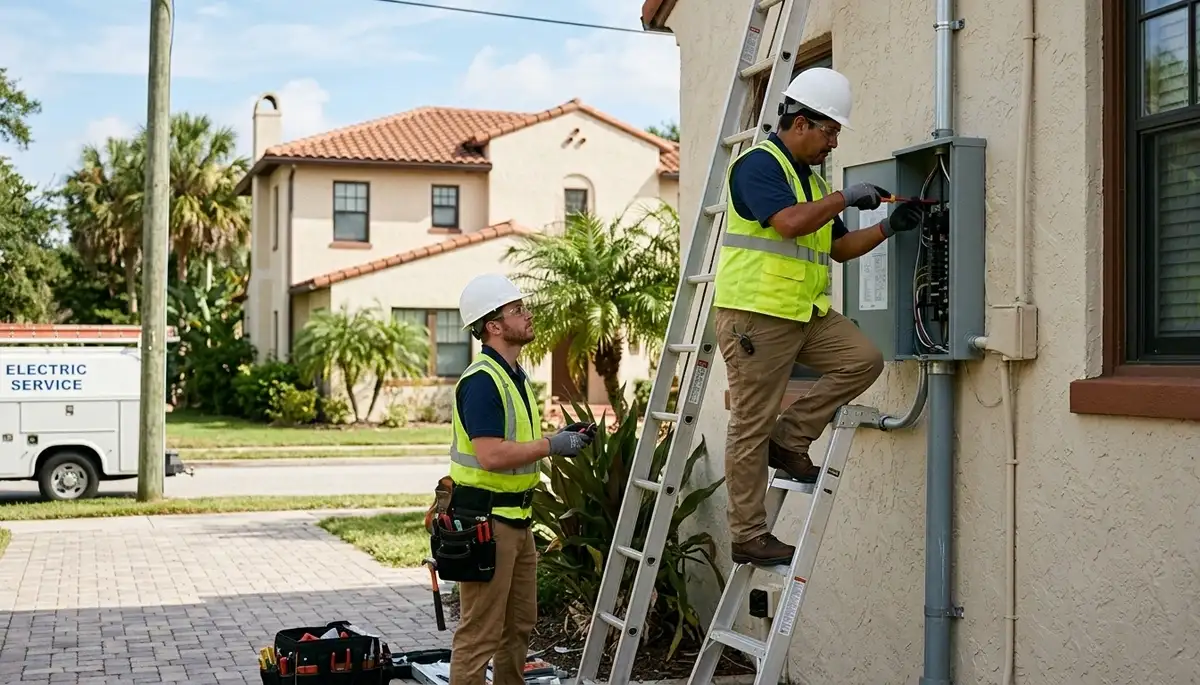
A local electrician working in Lake Wales knows that most panels here sit in a utility closet or on an exterior wall, that the slab underneath means new circuits require opening walls and ceilings, and that the block construction changes how wire is routed from one room to the next.
The two jobs that come up most often are panel replacements on service that was never sized for central air and outlet work on circuits that have no ground at all. Homeowners in Bartow, FL face similar situations in houses built the same way.
Get the problem looked at before a tripped breaker that will not reset becomes a wiring repair that opens three walls.
Work Matched to How Lake Wales Homes Are Actually Built
An off-the-shelf approach fails in these homes because slab-on-grade construction with block walls means there is no basement or crawlspace to run wire through, so every new circuit has to be planned before the first hole is cut.
Older block homes here carry wiring inside conduit run along interior walls, which changes the routing entirely. Newer detached homes on larger lots add long outdoor runs to outbuildings and pool equipment, which age differently from the house itself. Expert home electrical inspections identify exactly what each situation involves before work begins.
Four services that fit these homes and what they are being asked to carry: quality generator installation, reliable whole home surge protection, specialist electric car charger installation, and professional GFCI circuit work that brings ungrounded outlets up to what the house actually needs.
When Lake Wales Homes Were Built Still Shapes What They Need
Most houses in Lake Wales went up from the forties through the early seventies, a stretch when panels were sized at sixty to one hundred amps, grounding was not yet required, and aluminum wiring was common in the later years of that period. Three things follow directly from that: the service is undersized for modern loads, most outlets are two-prong, and connections in homes from the late sixties and early seventies can run warm under load.
Breakers That Trip and Will Not Reset
A breaker that trips repeatedly and will not hold is the homeowner's signal that a circuit is carrying more than it was built for. In a house sized at sixty amps, adding central air or a second refrigerator pushes the panel past what it was ever meant to handle, and a breaker that keeps tripping is the last warning before something fails.
Local electricians assess the full load before recommending whether the panel needs more circuits or a full service upgrade. Homeowners in Winter Haven, FL with the same panel age get the same evaluation before any work is priced.
Outlets Warm to the Touch
An outlet that feels warm when nothing heavy is plugged into it points to aluminum wiring, which was installed in many homes built in the late sixties and early seventies. Aluminum expands and contracts differently from copper, and over time the connections loosen and generate heat that the homeowner can feel at the cover plate.
Local electricians identify aluminum wiring, assess every connection point, and install compatible devices or re-terminate the connections so the circuit runs at the temperature it should.
Two-Prong Outlets Throughout the House
Two-prong outlets in a house mean the circuits behind them were never grounded, which is exactly what was installed before grounding became required. A house full of two-prong outlets cannot safely run the appliances and electronics that expect a ground path, and adapters do not solve the underlying problem.
Adding grounded outlets to an ungrounded circuit is done by installing the outlets with test and reset buttons, which the code allows as a replacement method, and it improves both safety and the function of everything plugged in.
A Panel That Was Never Sized for What Got Added
A pool pump, an electric car charger, or a new air conditioning unit added to a house running on a sixty-amp service draws more than the panel was designed to supply. On a hot afternoon when the air conditioning, the pool pump, and the charger all run together, the panel is being asked to carry a load it was never built for.
Local electricians calculate the actual load, upgrade the service to one hundred or two hundred amps as the house requires, and install the circuits needed so the homeowner can run everything without watching the breaker box.
Routing Wire Through Block Walls
Block and stucco construction means there is no hollow wall cavity to fish wire through the way a wood-frame house allows. Every new circuit has to be planned around what the block will and will not let through, and that changes how long the job takes and where the wire ends up running.
Local electricians familiar with these homes know the routing options before the first hole is cut, which keeps the work focused and avoids opening finished surfaces that do not need to be touched.
Arrange a no-pressure visit with a local electrician who works in Lake Wales every week. Call (863) 313-1212 and describe what the house is doing.
On Call Electrical delivers work in Lake Wales, FL that holds up the way the house deserves.
Full Electrical Services Available Across Lake Wales, FL
The list below covers the range of work available to Lake Wales homeowners. Find the situation that matches yours and reach out to discuss it.
Urgent Electrical Work for Lake Wales, FL Homes
- Electrical Repair - A breaker that will not reset, an outlet that stopped working, or a fixture that flickers under load all need a look before the problem grows.
- Outlet Repair - Outlets that feel warm, fail to hold a plug, or show scorch marks around the face need to be replaced, not ignored.
- Switch Repair - A switch that sparks, hums, or controls a light intermittently is a connection problem that gets worse with use.
- Smoke Detector Installation - Detectors that chirp, fail to respond to the test button, or have never been replaced need to come down and be replaced with working units.
- Fire Alarm Installation - Homes that have never had a hardwired alarm system can have one added without a full rewire in most cases.
If any of these match what the house is doing right now, call (863) 313-1212 to get someone out.
Panel, Service, and Wiring Work for Lake Wales, FL Homes
- Electrical Panel Upgrade - A sixty-amp panel in a house running central air, a washer and dryer, and modern appliances is undersized and needs to be replaced.
- Electrical Panel Installation - New panel installations bring the service entrance up to what the house is actually drawing and leave room for what gets added later.
- Electrical Wiring - Homes wired before the seventies often have wiring that was sized for a much lighter load than what runs through it today.
- Electrical Service - The service coming into the house sets the ceiling for everything else, and a service that was sized decades ago may no longer be enough.
- New Construction Wiring - Additions, garage conversions, and new structures on the property need wiring that matches what the main panel can supply.
Panel and service work in homes built this way requires someone who knows what the original installation looked like and what the house has accumulated since then.
Safety and Protection Work for Lake Wales, FL Homes
- GFCI Circuits - Circuits near water that were installed before the outlets with test and reset buttons were required need to be brought up to what protects the homeowner today.
- GFC Outlets - Individual outlets in kitchens, bathrooms, and garages that were never replaced with protected versions create a shock risk every time the circuit is used near water.
- Lightning Surge Protection - A surge that travels through the service entrance can reach every device in the house in a fraction of a second, and whole-house protection stops it at the panel.
- Whole Home Surge Protection - Protecting the panel from voltage spikes keeps appliances, electronics, and the wiring itself from taking damage that adds up over time.
- Home Electrical Inspections - An inspection of a house built in the forties through the seventies will turn up conditions the homeowner did not know were there and could not see from the outlet cover.
Safety work in Lake Wales homes built before modern codes were in place is not optional maintenance. It is the difference between a house that runs safely and one that carries a risk the homeowner cannot see. A local electrician can walk through the house, identify what needs attention, and explain what each item involves before any work is scheduled. Call (863) 313-1212 to set that up.
Lighting, Outdoor, and Added-Load Work for Lake Wales, FL Homes
- Electric Car Charger Installation - A Level 2 charger needs a dedicated circuit the original panel may not have room for, and the installation has to account for where the panel sits relative to where the car parks.
- Pool Pumps - A pool pump added to a house running on a service sized before pools were common draws a load the panel was not built to supply continuously.
- Landscape Lighting - Outdoor lighting runs from the house to fixtures across the yard, and the wiring has to be sized and protected for what sits outside year-round.
- Security Lights - Motion-activated security lighting on a block home often requires running wire along an exterior wall or through conduit, and the method changes by house.
- Generator Installation - A standby generator tied to the panel keeps the house running when the utility goes down, and the transfer switch has to be matched to what the panel can handle.
Added loads on houses built before these loads existed require someone who can look at the panel, the service, and the layout of the house and tell the homeowner what the job actually involves before the first wire is pulled. Call (863) 313-1212 to talk through what the house needs.