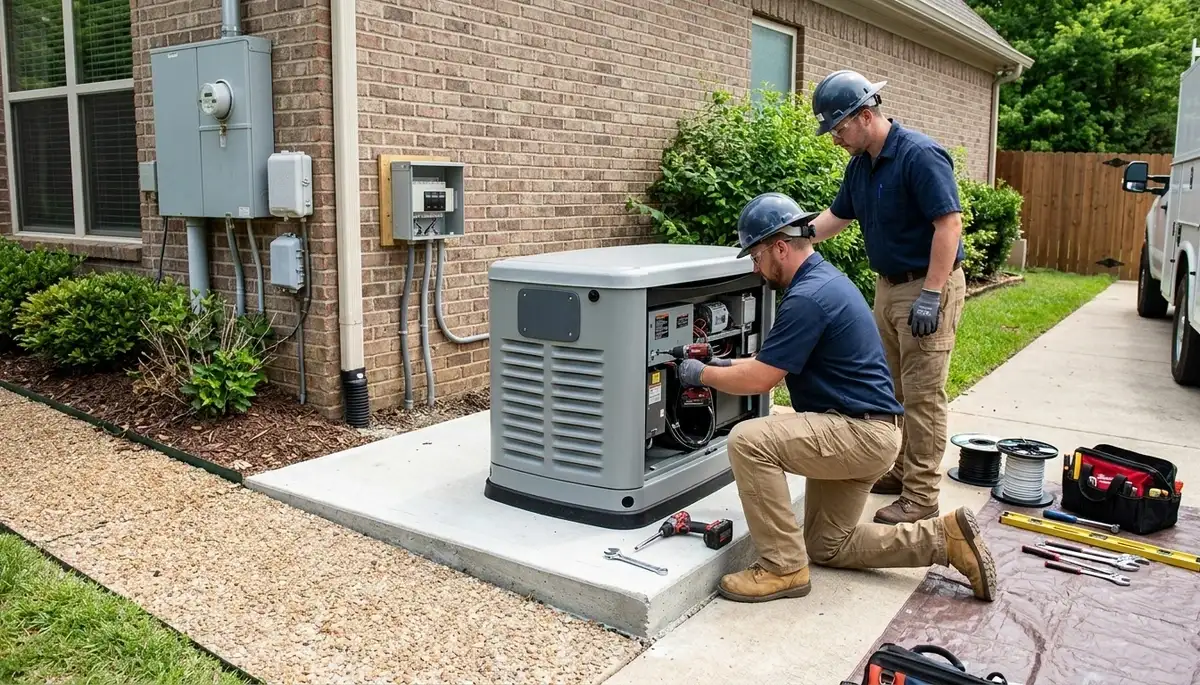
Generator Installation That Keeps Lakeland Homes Running
Generator Installation in Lakeland starts with understanding what the house behind the meter was built to carry. Most homes here went up between the late 1950s and the mid-1980s, block-and-stucco construction on slab-on-grade, with panels sized for a fraction of today's load. Electrical contractors serving Lakeland who work in these houses know that adding a standby generator without first accounting for what the panel can handle creates a system that trips under the first real demand. Pairing generator work with professional electrical panel upgrade service is often what separates a generator that runs reliably from one that shuts down when it matters most.
Because these homes sit on slab-on-grade, there is no crawlspace or basement to route new wiring through. Running the transfer switch, the fuel line coordination, and the new circuits from the generator to the panel means working along exterior walls and through the attic space above the living area in Lakeland. That adds time and scope to what might look like a straightforward installation. Postponing the work after a panel has already shown signs of overload means the generator itself becomes the load that finally exposes how much the panel has been carrying. Homeowners who also run pool equipment should plan for expert pool pump circuits to be included in the load calculation from the start.
What Lakeland Contractors Handle Around Generator Installation
A standby generator touches more of the house than the transfer switch alone. These four services come up regularly alongside generator work in Lakeland homes.
Surge Protection for Slab-Built Homes
A generator that kicks on during an outage sends a surge through whatever circuits are live at that moment. Houses built on slab with original wiring carry that surge to every outlet and appliance connected at the time. Getting quality whole home surge protection installed alongside the generator keeps that transfer from damaging what the generator is meant to protect.
Electrical Panel Inspection Before Transfer Switch Work
Installing a transfer switch on a panel that has no room for additional breakers, or one that runs warm at the main lugs, creates a hazard rather than a backup. Contractors in Lakeland routinely find that the panel needs to be evaluated before generator work begins. Reliable home electrical inspections confirm what the panel can handle before the generator is sized.
Outdoor Circuit Work for Generator Placement
Most standby generators in Lakeland sit on a concrete pad outside the home, and the run from the generator to the transfer switch follows the exterior wall. Outdoor circuits on block-and-stucco homes age differently from interior wiring, and conduit mounted on the exterior needs to be evaluated as part of the installation scope.
Car Charger Circuits Added to the Generator Load Plan
A detached garage or a carport addition on a Lakeland home often runs on a circuit that was never meant to carry a car charger. When the generator is sized without accounting for that load, the charger pulls the system down during an outage. Including specialist electric car charger installation in the generator load plan from the beginning keeps that circuit from becoming the weak point.

How Load Shifts Through the Year in Lakeland Homes
The same house carries different demands in each season, and those shifts reveal whether the panel and the generator behind it are sized for what the house actually runs.
Spring Generator Installation: Plan Before the Load Climbs in Lakeland, FL
Spring is the window to schedule generator installation before cooling loads climb. Pool pumps come back online, outdoor circuits that sat idle through winter get switched back on, and central air starts running again. A Lakeland home carrying all of that at once is the right time to confirm the generator and the panel behind it are sized to match.
Schedule Spring Generator Installation
Summer Generator Installation: When Lakeland, FL Panels Stop Hiding
A panel sized in the 1960s running central air through a long summer is the condition that makes an undersized service visible. When the generator transfers load during an outage and the panel is already carrying cooling, the gap between what was installed and what the house needs becomes impossible to ignore. Specialists in electrical repair often find the root cause in summer when the load has nowhere left to go.
Schedule Summer Generator Installation
Fall Generator Installation: Fix What Summer Exposed in Lakeland, FL
Fall is the handoff point. Cooling drops off, heating starts up, and the circuits that ran warm through the summer carry a new set of loads before they have had any time to recover. A Lakeland home that showed flickering lights or tripped breakers during the summer months should have generator and panel work completed in fall before the next full load arrives.
Schedule Fall Generator Installation
Winter Generator Installation: Stacked Loads on Lakeland, FL Circuits
Winter stacks electric space heaters, holiday lighting, and heating equipment onto circuits that were sized for far less. A Lakeland home running all of that without a properly sized generator and transfer switch is running without a safety net. When one circuit trips, the others often follow, and a generator that was undersized at installation offers no real protection against that cascade.
Schedule Winter Generator Installation